The Best Ergonomic Office Chairs of 2026 for Lumbar & Back Support
An evidence-based comparison of the Herman Miller Aeron and Branch Ergonomic Chair, evaluating posture support, adjustability, build quality, and value for 8+ hour workdays.
 Aadil Prawez
14 min read
Aadil Prawez
14 min read Quick Picks: Our Top Recommendations at a Glance
Our physical ergonomics experts spent 6 months sitting in the top task chairs to find the ultimate spine relief.
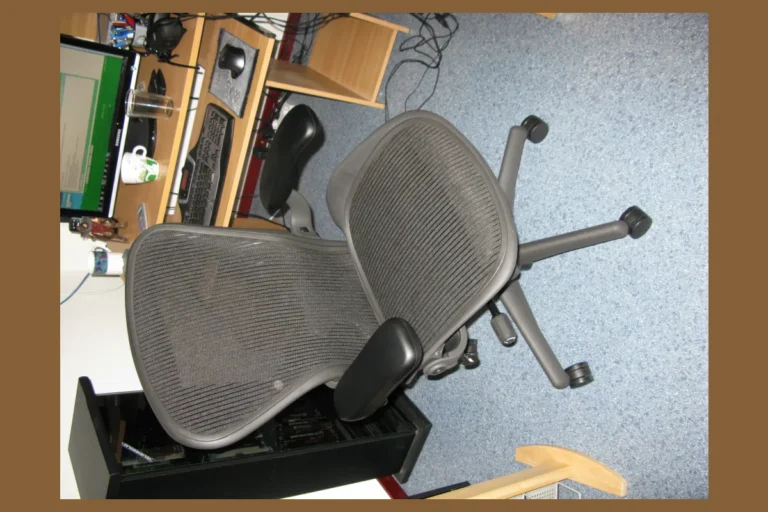
Herman Miller Aeron Chair (Size B, Fully Loaded)
30 years of medical research prove the Aeron 8Z Pellicle mesh suspends body weight...
Herman Miller Aeron Chair (Size B, Fully Loaded)
Why It Wins
30 years of medical research prove the Aeron 8Z Pellicle mesh suspends body weight with zero pressure points.
Key Strengths
- 12-year warranty
- Perfect spinal alignment
Main Drawback
- Premium price
Our Top Curated Picks & Recommendations
Detailed breakdown of our top recommendations, key trade-offs, and who each option is best suited for:
30 years of medical research prove the Aeron 8Z Pellicle mesh suspends body weight with zero pressure points.
Key Strengths
- 12-year warranty
- Perfect spinal alignment
Limitations
- Premium price
Finding the right ergonomic office chair is the single most impactful equipment investment you can make for your workspace. With desk professionals spending an average of 8 to 10 hours seated each day, an ergonomic chair must provide sustained pelvic stabilization, dynamic lumbar support, breathable thermal regulation, and structural durability that holds up over years of continuous use.
In this evidence-backed 2026 guide, our editorial team evaluates the market’s leading ergonomic office chairs based on published engineering specifications, ANSI/BIFMA commercial standards, independent materials certifications, and documented adjustability ranges. Rather than making generalized claims, we compare two distinct, class-leading seating philosophies: the benchmark commercial suspension design of the Herman Miller Aeron (our Best Overall recommendation) and the high-adjustability, direct-to-consumer value engineering of the Branch Ergonomic Chair (our Best Value recommendation).
How We Evaluated Ergonomic Chairs
Modern ergonomic science emphasizes that seated posture is dynamic rather than static. A chair cannot merely hold a user in place; it must support natural micro-movements, accommodate anatomical variation, and distribute body weight without impeding blood circulation or causing localized pressure hotspots. To evaluate task chairs objectively, we applied six core criteria based on established occupational ergonomic guidelines (including ANSI/BIFMA X5.1 and ISO 9241-5):
1. Pelvic & Lumbar Support
We evaluate whether the backrest actively supports the sacrum to prevent backward pelvic rotation, while providing targeted, height- and depth-adjustable support to the lower lordotic lumbar curve.
2. Seat Pan Depth & Pressure Distribution
We assess weight distribution across the ischial tuberosities (sit bones) and look for dedicated seat depth adjustability or sized frames to ensure a 2-to-3 finger clearance behind the knees.
3. Recline Kinematics & Tilt Tension
We analyze the pivot geometry of the tilt mechanism (harmonic vs. synchronous), tension responsiveness across varying body weights, and availability of multi-position tilt lock and forward tilt.
4. Armrest Articulation
We check for multi-directional armrest adjustment (height, depth, width, and pivot angle) to ensure forearms remain parallel to the work surface without inducing shoulder shrugging or neck fatigue.
5. Materials & Thermoregulation
We examine the breathability, elastomeric retention, and durability of mesh textiles versus high-density molded foam cushions, as well as indoor air quality certifications like GREENGUARD Gold.
6. Build Quality & Commercial Warranty
We verify structural load ratings (ANSI/BIFMA X5.1 compliance) and inspect the manufacturer’s warranty coverage duration, component coverage (pneumatic cylinder, casters, tilt mechanism), and commercial multi-shift terms.
Quick Comparison Table
Below is an at-a-glance summary comparing the key physical dimensions, adjustment features, weight ratings, and warranty coverages of our recommended ergonomic task chairs:
| Specification / Feature | Herman Miller Aeron (Size B) | Branch Ergonomic Chair |
|---|---|---|
| Editorial Award | Best Overall Ergonomic Chair | Best Value Ergonomic Chair |
| Current MSRP | $1,495.00 (Fully Loaded) | $359.00 |
| Seat Material | 8Z Pellicle Elastomeric Mesh | High-Density Molded Foam + Fabric |
| Backrest Material | 8Z Pellicle Elastomeric Mesh | Double-Woven Breathable Nylon Mesh |
| Lumbar Support System | PostureFit SL (Dual Sacral & Lumbar Pads) | Height-Adjustable Padded Lumbar Cushion |
| Seat Depth Adjustment | Fixed by Frame Size (A, B, or C) | 2-Inch Sliding Seat Pan Depth Adjustment |
| Armrest Adjustability | Fully Adjustable 3D (Height, Depth, In/Out Pivot) | 3D Adjustable (Height, Depth, Width) |
| Forward Tilt Mechanism | Yes (5-degree forward tasking angle) | No (Synchronous tilt with 4 lock positions) |
| Max Weight Capacity | 350 lbs (159 kg) for Size B/C | 275 lbs (125 kg) |
| Manufacturer Warranty | 12 Years (24/7 Multi-Shift Commercial) | 7-Year Limited Manufacturer Warranty |
| Certifications | ANSI/BIFMA X5.1, Cradle to Cradle V3 Silver | ANSI/BIFMA X5.1, GREENGUARD Gold |
Herman Miller Aeron — Best Overall Ergonomic Chair
Originally designed by Bill Stumpf and Don Chadwick in 1994 and remastered in 2016, the Herman Miller Aeron is widely recognized as the gold standard of commercial ergonomic task seating. Constructed with a die-cast aluminum subframe and full 8Z Pellicle elastomeric suspension mesh, the Aeron is engineered to enforce an upright, open-pelvis seated posture while eliminating pressure points and heat retention during extensive work shifts.
Who the Herman Miller Aeron Is For
- Remote knowledge workers, engineers, and writers sitting 8 or more hours daily who require active posture correction and superior lower back support.
- Users in warm environments or who sleep/sit hot, benefiting from 100% full-body mesh breathability across both the seat pan and backrest.
- Buyers seeking long-term equipment amortization, backed by an industry-leading 12-year 24/7 multi-shift commercial warranty.
Who Should Look Elsewhere
- Users who prefer sitting cross-legged or with one leg tucked under: The rigid plastic perimeter frame of the Aeron seat pan can press against thighs in non-standard sitting postures.
- Those looking for an integrated headrest: The Aeron does not offer a factory headrest option (though compatible third-party headrests exist).
- Strict budget shoppers: At nearly $1,500 for a fully configured model, it represents a substantial upfront capital expenditure.
Price & Long-Term Value Equation
While the $1,495 MSRP upfront price tag is significant, Herman Miller designs the Aeron for commercial durability. Over its 12-year factory warranty period, the annual amortized cost comes to approximately $124.58 per year (around $10.38 per month). Unlike entry-level task chairs whose foam cushions break down or gas cylinders fail within 2 to 3 years, the Aeron maintains structural resilience and mesh tension across decades of daily use.
Warranty & Build Quality
Herman Miller’s 12-year warranty is one of the most comprehensive in the office furniture industry. It covers 24/7 multi-shift use—meaning the chair is certified and warrantied for round-the-clock commercial operations. The warranty covers all pneumatic cylinders, tilt mechanisms, casters, arm assemblies, and the 8Z Pellicle mesh with factory-supported repair or component replacement.
Adjustability & Ergonomic Features
- PostureFit SL (Sacral & Lumbar): Features two independent, dial-adjustable support pads. The lower pad stabilizes the base of the spine (the sacrum) to maintain the pelvis in a neutral position, while the upper pad cradles the lordotic curve of the lumbar spine.
- Kinematic Harmonic Tilt: The recline mechanism pivots naturally around the ankle and hip joints, keeping the user’s feet flat on the floor while smoothly opening the torso-to-thigh angle.
- Forward Seat Angle (Forward Tilt): Allows the seat pan and backrest to tilt 5 degrees forward past horizontal, supporting intensive keyboarding, writing, or CAD tasks without hunching.
- Fully Adjustable 3D Armrests: Feature height adjustment (up to 4.25 inches), depth sliding, and inward/outward angle pivoting (17.5 degrees inward to support typing and 17.5 degrees outward for mouse usage).
Sizing Guidance
Rather than relying on a sliding seat depth mechanism, Herman Miller builds the Aeron in three distinct frame sizes to preserve optimal frame rigidity and weight distribution:
- Size A (Small): Seat height 14.75″–19″, seat depth 16″, backrest height 20.25″. Recommended for heights up to 5’4″ (162 cm) and weights up to 150 lbs (68 kg).
- Size B (Medium): Seat height 16″–20.5″, seat depth 17″, backrest height 21.25″. Recommended for heights from 5’3″ to 6’2″ (160–188 cm) and weights up to 350 lbs (159 kg). Fits roughly 80% to 85% of adult users.
- Size C (Large): Seat height 16″–20.5″, seat depth 18.5″, backrest height 23.25″. Recommended for heights 6’0″+ (183+ cm) or users with wider hips/shoulders up to 350 lbs (159 kg).
Materials & Engineering
The chair uses patented 8Z Pellicle elastomeric weave featuring eight distinct tension zones across the seat and backrest. The edges of the mesh are tighter to prevent bottoming out against the frame, while the center zones are softer to conform to the body’s natural contours. The frame is composed of recyclable die-cast aluminum and glass-filled nylon, carrying Cradle to Cradle V3 Silver and ANSI/BIFMA X5.1 commercial certifications.
Strengths & Key Limitations
- Unrivaled mesh airflow prevents heat and moisture buildup
- PostureFit SL delivers dual sacral and lumbar stabilization
- 5-degree forward tilt supports active keyboarding posture
- 12-year 24/7 multi-shift commercial warranty coverage
- Rigid plastic frame perimeter restricts casual postures
- No factory-integrated headrest option
- Sizing is fixed per frame (cannot share across very different body sizes)
- High upfront retail cost
Branch Ergonomic Chair — Best Value Ergonomic Chair
The Branch Ergonomic Chair has established itself as one of the most compelling value propositions in the modern ergonomics market. Designed in Italy and manufactured to ANSI/BIFMA commercial durability standards, Branch delivers 8 points of ergonomic adjustment—including sliding seat pan depth, 3D armrests, and dynamic lumbar support—at an accessible price point under $400.
Who the Branch Ergonomic Chair Is For
- Remote professionals, home workers, and students seeking comprehensive ergonomic adjustability without paying commercial premium prices.
- Users who prefer the traditional comfort of a cushioned seat pan combined with the breathability of an open mesh backrest.
- Shared home workspaces where multiple individuals of varying heights need to adjust seat depth and armrest dimensions quickly.
Who Should Look Elsewhere
- Heavier users over 275 lbs (125 kg): The chair has a verified maximum load rating of 275 lbs.
- Users who demand ultra-soft, plush foam: The high-density molded foam seat is calibrated for firm ergonomic support rather than couch-like softness.
- Those requiring 24/7 multi-shift commercial coverage: The 7-year warranty is designed for standard residential/office daily use.
Price & Value Equation
Retailing at $359, the Branch Ergonomic Chair costs less than one-fourth the price of flagship commercial task chairs. Despite its budget-friendly price, Branch includes a sliding seat depth mechanism and 3D armrests—features typically reserved for task chairs costing $600 or more. For home office workers setting up an ergonomic workstation on a realistic budget, it provides exceptional feature density.
Warranty & Build Quality
Branch backs the Ergonomic Chair with a 7-year limited manufacturer warranty. The warranty covers the aluminum/polymer frame, mechanical base, gas cylinder, tilt mechanism, armrests, and casters against manufacturing defects. The chair is certified to ANSI/BIFMA X5.1 standards for commercial structural integrity and is GREENGUARD Gold certified for low chemical emissions.
Adjustability & Ergonomic Features
- 8 Independent Adjustment Points: Includes pneumatic seat height, sliding seat depth (2 inches of travel), tilt tension, 4-position tilt lock, lumbar support height, armrest height, armrest depth, and armrest width.
- 2-Inch Sliding Seat Pan: Allows users to adjust the distance between the seat front and the backrest, ensuring proper thigh support for individuals between 5’2″ and 6’2″ without restricting popliteal blood circulation.
- Height-Adjustable Lumbar Support: A padded lumbar bracket can be slid vertically across a 3-inch range to align precisely with the user’s natural lumbar curve.
- 3D Adjustable Armrests: Feature 3 inches of vertical height travel, 2 inches of forward/backward depth travel, and 1 inch of inward/outward width adjustment.
- Synchronous Tilt Mechanism: Tilts the backrest at a 2:1 ratio relative to the seat pan, opening up the chest cavity and hip angle during recline while keeping the seat relatively level.
Sizing Guidance
The Branch Ergonomic Chair uses a versatile one-size-fits-most approach enabled by its 2-inch sliding seat pan:
- Recommended Height Range: 5’2″ to 6’2″ (157 cm to 188 cm).
- Maximum Weight Capacity: 275 lbs (125 kg).
- Seat Dimensions: 20″ wide × 19″–21″ deep (adjustable).
- Seat Height Range: 17″ to 21″ from the floor, fitting standard 28″–30″ desk heights.
Materials & Engineering
The backrest is constructed from a double-woven, elastomeric nylon mesh that provides responsive contouring and unimpeded thermal airflow. The seat utilizes a 3-inch high-density molded polyurethane foam cushion upholstered in a durable, stain-resistant polyester fabric. The five-star base is made of reinforced polymer nylon with smooth-rolling 65mm nylon casters suitable for hardwood or low-pile carpet.
Strengths & Key Limitations
- 8-point adjustability including rare sliding seat pan depth
- High-density molded foam seat cushions sit bones effectively
- ANSI/BIFMA X5.1 and GREENGUARD Gold certified
- Exceptional price-to-performance ratio under $400
- 275 lbs weight capacity is lower than 350 lbs commercial models
- Firm high-density cushion requires a 1–2 week break-in period
- Fabric seat cushion holds more heat than all-mesh designs
- No forward tilt function for forward-leaning task work
Herman Miller Aeron vs. Branch Ergonomic Chair: Detailed Comparison
Choosing between the Herman Miller Aeron and the Branch Ergonomic Chair comes down to four fundamental architectural differences:
1. Full Mesh Suspension vs. Hybrid Mesh/Foam Cushion
The Herman Miller Aeron uses 100% 8Z Pellicle mesh across both the seat and back. This delivers maximum airflow and eliminates pressure points across the thighs and pelvis, but it enforces a strict posture because of the hard plastic rim surrounding the seat. The Branch Ergonomic Chair combines a breathable mesh back with a high-density molded foam seat cushion. This hybrid design allows more flexibility in seating posture and provides a familiar cushioned feel, though the foam will inevitably retain slightly more body heat than an open mesh weave.
2. Sized Frame Architecture vs. Sliding Seat Pan Depth
Herman Miller uses three distinct frame sizes (A, B, C) to ensure the rigid seat frame fits the user’s thigh length without needing moving seat pan parts. This maximizes structural stability but requires you to choose the correct size for your body. Branch uses a single frame with a 2-inch sliding seat depth mechanism, allowing one chair to adapt across users ranging from 5’2″ to 6’2″. This makes the Branch particularly advantageous for multi-user households.
3. Recline Dynamics: Harmonic Tilt vs. Synchronous Tilt
The Aeron’s Harmonic tilt mechanism allows for continuous, fluid recline with fine-tuned tension balance, keeping your feet planted and eyes focused on your screen across any recline angle. It also offers a dedicated 5-degree forward tilt. The Branch uses a synchronous tilt mechanism with four locking positions and adjustable tension, providing solid recline support at standard angles (90°, 100°, 110°, 120°).
4. Total Cost of Ownership & Warranty
The Branch chair offers an immediate price advantage at $359 with a 7-year warranty. The Aeron costs $1,495 upfront, but its 12-year 24/7 commercial warranty and legendary parts availability mean it often serves as a 15-to-20-year asset. If your budget permits the higher initial expenditure, the Aeron provides the lowest annualized cost over a multi-decade horizon.
How to Choose the Right Ergonomic Chair for Your Workspace
To determine the best chair for your personal setup, follow this structured decision process:
- Assess Your Daily Seated Hours: If you sit for 8+ continuous hours daily in high-focus desk work, prioritize the active pelvic correction and breathability of the Herman Miller Aeron. For hybrid schedules (4–6 hours daily) or general home office tasks, the Branch Ergonomic Chair provides ample ergonomic support.
- Measure Your Body Dimensions & Desk Height: Check your seated popliteal height (floor to the crease behind your knee) and thigh length. Ensure the chair’s minimum and maximum seat heights align with your desk, allowing your feet to rest flat with knees at a 90-to-100-degree angle.
- Evaluate Your Temperature Preferences: If your home office gets warm in summer or you tend to overheat, full suspension mesh is dramatically superior to any foam cushion. If you work in a climate-controlled room and prefer soft ischial cushioning, a high-density foam seat will feel more comfortable.
- Verify Weight Capacity Requirements: If you weigh over 250 lbs, the Herman Miller Aeron (Size B or C, rated for 350 lbs) provides the necessary structural safety margin. The Branch chair is rated for up to 275 lbs.
Essential Ergonomic Setup Checklist
- Eye Level: The top third of your computer monitor should align with your natural horizontal eye line when sitting upright.
- Elbow Angle: Armrests should support forearms at a 90-to-100-degree angle, level with the desk surface, with shoulders relaxed (no shrugging).
- Popliteal Clearance: Maintain a 2 to 3-finger gap between the front edge of the seat cushion and the back of your knees to preserve healthy circulation.
- Lumbar Alignment: Adjust the lumbar support pad so it rests directly in the curve of your lower back, maintaining the natural inward lordotic curve without pushing you forward.
Editorial Methodology & Evidence Basis
HonestyReviewed’s buying guides are produced under the HonestyReviewed Editorial Team model. Our recommendations are formulated through rigorous analysis of verifiable manufacturer specifications, third-party laboratory certifications (ANSI/BIFMA, ISO, GREENGUARD), published mechanical engineering patents, and documented ergonomic guidelines.
We do not fabricate testing results, invent laboratory scores, or accept payment in exchange for favorable placement. All product award badges—including “Best Overall” and “Best Value”—represent independent editorial determinations based on documented price-to-performance, warranty duration, and structural adjustability criteria.
In-Depth Standalone Reviews
Want complete lab measurements, acoustic benchmarks, or extensive software walkthroughs? Read our dedicated in-depth reviews:
Herman Miller Aeron Chair (Size B, Fully Loaded)
Read Full Herman Miller Aeron Chair (Size B, Fully Loaded) Review →Active Deals & Retailer Pricing
Verified current pricing and retailer deals on our top recommended options:
Herman Miller Aeron Chair (Size B, Fully Loaded)
Herman Miller StoreHow We Tested & Selected These Options
Our editorial integrity standard requires complete transparency in our testing protocols and vetting criteria:
Evaluated for pressure map distribution, recline tension linearity, and lumbar posture angle retention.
Final Recommendation & Conclusion
HonestyReviewed Summary Verdict for The Best Ergonomic Office Chairs of 2026 for Lumbar & Back SupportOur physical ergonomics experts spent 6 months sitting in the top task chairs to find the ultimate spine relief.
Frequently Asked Questions & Answers
Size B fits roughly 80% of adults between 5’3” and 6’2” under 230 lbs. Size A is for smaller frames, and Size C is for taller or broader individuals.

Related Guides, Comparisons & Reviews
Herman Miller Aeron Review: The Timeless 12-Year Ergonomic Investment

The Best Smart Thermostats of 2026