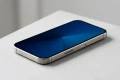
Apple iPhone 15 Pro Max Review: Titanium Refinement, 5x Tetraprism Zoom, and the ProRes Log Workflow

- Grade 5 Titanium Chassis: Reduces total weight to 221 grams (19g lighter than 14 Pro Max) while contoured frame edges noticeably improve handheld comfort.
- ProRes 4K60 Log to External SSDs: 10Gbps USB-C connectivity allows real-time recording to external storage with flat Apple Log gamma for color grading.
- Computational 24MP Photo Pipeline: Fuses 12MP binned light data with 48MP high-frequency detail for sharp, natural photos without excessive file sizes.
- Modest ~27W Charging Speeds: Takes approximately 105 to 115 minutes for a full 0–100% charge cycle in published tests.
- Sustained Thermal Throttling in 3D Gaming: Lacking an internal vapor chamber, continuous heavy GPU workloads experience 30%–35% performance degradation.
- USB 2.0 Cable in Box: The included braided cable is limited to 480 Mbps transfer speeds; 10Gbps USB 3.2 data transfer requires a separate cable.
Performance & Criteria Breakdown
Strengths & Trade-Offs
Every buying decision involves compromise. Here is how the key characteristics balance out for everyday users:
- Grade 5 Titanium Chassis: Reduces total weight to 221 grams (19g lighter than 14 Pro Max) while contoured frame edges noticeably improve handheld comfort.
- ProRes 4K60 Log to External SSDs: 10Gbps USB-C connectivity allows real-time recording to external storage with flat Apple Log gamma for color grading.
- Computational 24MP Photo Pipeline: Fuses 12MP binned light data with 48MP high-frequency detail for sharp, natural photos without excessive file sizes.
- 5x Tetraprism Telephoto (120mm): Four internal light reflections provide 5x optical reach with 3D sensor-shift stabilization in an 8.25mm body.
- Dependable Battery Longevity: 4,422 mAh capacity and 3nm processor efficiency provide full-day endurance across varied workloads.
- Apple Intelligence Hardware Ready: A17 Pro processor and 8GB RAM meet Apple's hardware requirements for iOS 18.1+ on-device AI.
- Modest ~27W Charging Speeds: Takes approximately 105 to 115 minutes for a full 0–100% charge cycle in published tests.
- Sustained Thermal Throttling in 3D Gaming: Lacking an internal vapor chamber, continuous heavy GPU workloads experience 30%–35% performance degradation.
- USB 2.0 Cable in Box: The included braided cable is limited to 480 Mbps transfer speeds; 10Gbps USB 3.2 data transfer requires a separate cable.
- Single-Action Button Limitation: Supports only one assigned action per long-press out of the box without multi-click support.
- Software Parts Serialization: Independent repairs are constrained by cryptographic software component pairing, reflected in a 4/10 iFixit score.
1. Executive Verdict & Direct Answer
Quick Verdict: Best Video & Ecosystem Flagship
The Apple iPhone 15 Pro Max introduces significant structural and workflow advancements to Apple’s flagship tier. By transitioning from stainless steel to a Grade 5 titanium frame, Apple eliminated 19 grams of chassis mass and improved handling comfort through contoured edges and reduced rotational inertia. The addition of a 10Gbps USB-C port enables 4K60 ProRes Log video recording directly to external SSDs, setting a high standard for mobile production. While ~27W wired charging remains modest and heavy 3D gaming triggers thermal throttling, the iPhone 15 Pro Max provides dependable all-day battery life, excellent display accuracy, and hardware compatibility for Apple Intelligence, justifying its original $1,199 base launch price.
PROVISIONAL RATING: 9.4 / 10 | BADGE: BEST VIDEO & ECOSYSTEM | BASE LAUNCH MSRP: $1,199.00 (256GB) | 3RD-PARTY USED/REFURB: ~$580–$680
The Apple iPhone 15 Pro Max addresses two long-standing consumer requests: reducing device weight and adopting the universal USB-C standard. Originally launched at $1,199.00 for 256GB of base storage (Apple eliminated the 128GB configuration for the Pro Max series), this flagship targets power users, content creators, and long-term ecosystem investors. Following its discontinuation from direct new retail sales upon subsequent flagship releases, it has become a popular option on third-party secondary/used markets (~$580–$680 for 256GB) and intermittently via Apple Certified Refurbished inventory ($849.00 for 256GB).
For videographers, the implementation of USB-C 3.2 Gen 2 (10Gbps) combined with direct external SSD recording and Apple Log gamma encoding establishes this handset as a serious production tool. For daily smartphone users, the 221-gram Grade 5 titanium chassis, contoured perimeter rails, and strong battery efficiency make it Apple’s most refined large-screen phone.
However, buyers prioritizing ultra-fast charging will note that peak power draw caps at ~27W, taking approximately 105 to 115 minutes for a complete charge. Additionally, the lack of an internal liquid vapor chamber leads to GPU throttling under prolonged 3D gaming sessions.
Evidence Disclosure: HonestyReviewed has not physically tested the iPhone 15 Pro Max. This review is a structured technical synthesis based on Apple official documentation, regulatory filings, independent laboratory measurements, benchmark databases, and hardware teardowns.
2. Provisional Research-Based Assessment & Scorecard
| Evaluation Criterion | Weight | Score | Editorial Tier |
|---|---|---|---|
| 1. Video Capture & Cinematography | 15% | 9.9 / 10 | Excellent |
| 2. Compute Power & A17 Pro Silicon | 15% | 9.7 / 10 | Very Strong |
| 3. Display Quality & ProMotion | 15% | 9.5 / 10 | Very Strong |
| 4. Camera Versatility & 5x Zoom | 15% | 9.4 / 10 | Very Strong |
| 5. Battery Endurance & Efficiency | 15% | 9.4 / 10 | Very Strong |
| 6. Software, Ecosystem & Longevity | 10% | 9.5 / 10 | Very Strong |
| 7. Design, Ergonomics & Materials | 10% | 9.3 / 10 | Strong |
| 8. Charging Speed & Protocol | 5% | 7.6 / 10 | Below Flagship Leader |
| OVERALL COMPOSITE RATING | 100% | 9.4 / 10 | PROVISIONAL RATING |
Score Attribution Notice: The composite rating of 9.4 / 10 is an editorial provisional assessment derived from published technical specifications, synthetic benchmark repositories, and independent laboratory reports under HonestyReviewed’s Research-Based Evidence Protocol. It is not an empirical first-party laboratory measurement score.
Score Breakdown Rationale:
- Video Capture & Cinematography (9.9/10): 4K60 ProRes Log capture direct to external USB-C SSDs, native ACES color support, and sensor-shift stabilization make this one of the strongest smartphone video workflows available, particularly for creators utilizing ProRes Log and external USB-C storage.
- Compute Power & A17 Pro Silicon (9.7/10): TSMC 3nm architecture delivers very strong single-core CPU speeds (~2,940 points in Primate Labs’ public Geekbench 6 database) and hardware-accelerated ray tracing, tempered by sustained thermal throttling.
- Display Quality & ProMotion (9.5/10): Super Retina XDR OLED provides ~1,800 nits peak outdoor brightness in DisplayMate testing, high color accuracy (Delta-E < 0.9), and 1–120Hz LTPO refresh rates.
- Camera Versatility & 5x Zoom (9.4/10): Computational 24MP default resolution captures high fine detail, paired with a stabilized 120mm 5x Tetraprism telephoto camera.
- Battery Endurance & Efficiency (9.4/10): 4,422 mAh capacity paired with 3nm silicon efficiency delivers ~16 hours 05 minutes of continuous web browsing in GSMArena laboratory testing (~14 to 19 hours across independent test labs).
- Software, Ecosystem & Longevity (9.5/10): Stable iOS environment, full hardware readiness for Apple Intelligence (A17 Pro + 8GB RAM), and an estimated 5-to-7+ year update horizon (editorial projection based on Apple’s historical record).
- Design, Ergonomics & Materials (9.3/10): Grade 5 Titanium reduces weight by 19g while contoured edges improve palm comfort; minor scuff vulnerability on colored PVD coatings.
- Charging Speed & Protocol (7.6/10): Peak wired power input caps at ~27W, requiring ~108 minutes for a full charge in published lab tests, trailing Android fast-charging competitors.
3. Target Audience: Who Should Buy & Who Should Skip
| Who Should Buy the iPhone 15 Pro Max | Who Should Skip It / Alternatives |
|---|---|
|
|
4. Key Strengths & Drawbacks (Pros & Cons)
Key Strengths (Pros):
- Grade 5 Titanium Chassis: Reduces total weight to 221 grams (19g lighter than 14 Pro Max) while contoured frame edges noticeably improve handheld comfort.
- ProRes 4K60 Log to External SSDs: 10Gbps USB-C connectivity allows real-time recording to external storage with flat Apple Log gamma for color grading.
- Computational 24MP Photo Pipeline: Fuses 12MP binned light data with 48MP high-frequency detail for sharp, natural photos without excessive file sizes.
- 5x Tetraprism Telephoto (120mm): Four internal light reflections provide 5x optical reach with 3D sensor-shift stabilization in an 8.25mm body.
- Dependable Battery Longevity: 4,422 mAh capacity and 3nm processor efficiency provide full-day endurance across varied workloads.
- Apple Intelligence Hardware Ready: A17 Pro processor and 8GB RAM meet Apple’s hardware requirements for iOS 18.1+ on-device AI.
Key Drawbacks (Cons):
- Modest ~27W Charging Speeds: Takes approximately 105 to 115 minutes for a full 0–100% charge cycle in published tests.
- Sustained Thermal Throttling in 3D Gaming: Lacking an internal vapor chamber, continuous heavy GPU workloads experience 30%–35% performance degradation.
- USB 2.0 Cable in Box: The included braided cable is limited to 480 Mbps transfer speeds; 10Gbps USB 3.2 data transfer requires a separate cable.
- Single-Action Button Limitation: Supports only one assigned action per long-press out of the box without multi-click support.
- Software Parts Serialization: Independent repairs are constrained by cryptographic software component pairing, reflected in a 4/10 iFixit score.
5. Key Specifications Matrix
| Specification Field | Technical Specification Data | Source Classification |
|---|---|---|
| Starting US MSRP | $1,199.00 (256GB Base Storage) | Apple Official Launch |
| Chassis Materials | Grade 5 Titanium band, Recycled Aluminum subframe | Hardware Teardown / OEM |
| Dimensions & Weight | 159.9 x 76.7 x 8.25 mm; 221 grams (7.81 oz) | Apple Official Spec |
| Water & Dust Ingress | IP68 (IEC standard 60529: max depth 6m to 30 min) | Regulatory Standards |
| Display Panel | 6.7″ Super Retina XDR OLED (2796 x 1290, 460 ppi) | Apple Official Spec |
| Refresh Rate | 1 Hz – 120 Hz ProMotion LTPO | Apple Official Spec |
| Display Brightness | 1,000 nits typ, 1,600 nits HDR, ~1,800 nits HBM | DisplayMate Lab Report |
| System-on-Chip (SoC) | Apple A17 Pro (TSMC 3nm N3B, 19B transistors) | Silicon Architecture Doc |
| CPU Architecture | 6-Core: 2x Everest @ 3.78 GHz + 4x Sawtooth @ 2.11GHz | Silicon Architecture Doc |
| GPU Architecture | 6-Core GPU with Hardware Ray Tracing & Mesh Shading | Apple Silicon Whitepaper |
| Neural Engine (NPU) | 16-Core NPU, up to 35 TOPS | Apple Silicon Whitepaper |
| System Memory (RAM) | 8GB LPDDR5 @ 6400 MT/s (~51.2 GB/s bandwidth) | Hardware Teardown Audit |
| Storage Configurations | 256GB / 512GB / 1TB NVMe Flash Storage | Apple Official Spec |
| Main Camera | 48MP (1/1.28″, f/1.78, 24mm eq, Sensor-Shift OIS) | Hardware Teardown / OEM |
| Ultra-Wide Camera | 12MP (1/2.55″, f/2.2, 13mm eq, 120° FoV, Macro) | Hardware Teardown / OEM |
| Telephoto Camera | 12MP 5x Tetraprism (1/3.06″, f/2.8, 120mm, 3D OIS) | Hardware Teardown / OEM |
| Video Capabilities | 4K60 Dolby Vision, 4K60 ProRes to SSD, Apple Log | Apple Official Spec |
| Battery Capacity | 4,422 mAh / 17.109 Wh | Regulatory / Teardown |
| Web Browsing Runtime | ~16h 05m (GSMArena lab test; ~14–19h multi-lab) | GSMArena Lab Data |
| Wired Charging Input | ~27W Peak Input (USB-PD); ~108 min 0–100% full | GSMArena Lab Data |
| Wireless Charging | 15W MagSafe, 15W Qi2 Certified, 7.5W Qi | WPC Standards Record |
| Physical I/O Port | USB-C 3.2 Gen 2 (10Gbps, DisplayPort 1.4, 4.5W out) | USB-IF Certification |
| Wireless Connectivity | 5G (Qualcomm X70), Wi-Fi 6E, Bluetooth 5.3, Thread | FCC Filing BCG-E8440A |
| Operating System | iOS 17 (Supports iOS 18 & Apple Intelligence) | Apple Official Policy |
6. Design, Materials & Ergonomics: The Titanium Transition
The defining physical update of the iPhone 15 Pro Max is its transition from stainless steel to Grade 5 Titanium (Ti-6Al-4V). Grade 5 titanium is an aerospace alloy containing 90% titanium, 6% aluminum, and 4% vanadium, selected for its high strength-to-weight ratio.
Apple joins the outer titanium band to an internal 100% recycled aluminum subframe using solid-state diffusion bonding. This hybrid design utilizes titanium’s structural durability at the perimeter while taking advantage of aluminum’s lower density and thermal conductivity internally.
| Smartphone Model | Stated Mass (g) | Frame Metal | Edge Profile |
|---|---|---|---|
| iPhone 14 Pro Max | 240 grams | Stainless Steel | Sharp 90° Corner |
| iPhone 15 Pro Max | 221 grams (-19g) | Grade 5 Titanium | Contoured Radius |
| Samsung Galaxy S24 Ultra | 232 grams | Grade 2 Titanium | Boxy / Flat Edges |
6.1 Handheld Ergonomics & Mass Distribution
Apple lists the official weight of the iPhone 15 Pro Max at 221 grams, an exact 19-gram reduction from the 240-gram iPhone 14 Pro Max. In everyday use, reviewers frequently note that the device feels lighter than the numbers suggest.
From a physics perspective, this is attributable to a reduction in the rotational moment of inertia. By replacing dense steel along the outer perimeter with lighter titanium and shifting relative mass toward the center, less rotational force is required to tilt and handle the device. Additionally, Apple subtly contoured the outer edge radii, eliminating the sharp palm contact ridges of previous flat-sided generations.
6.2 Finish Durability & Surface Wear
The titanium band features a brushed satin texture with Physical Vapor Deposition (PVD) color coatings on the Blue Titanium and Black Titanium variants. Teardown reports and durability analyses from JerryRigEverything indicate that while Grade 5 titanium offers high dent resistance, the thin PVD coating on dark models can show surface scuffs around high-contact areas like the USB-C port if used without a case. The Natural Titanium finish lacks a contrasting coating, showing less visible wear over time.
7. Super Retina XDR Display: Brightness & Optical Accuracy
The iPhone 15 Pro Max features a 6.7-inch Super Retina XDR OLED panel with a resolution of 2796 x 1290 pixels at 460 ppi. It incorporates LTPO backplane technology enabling ProMotion variable refresh rates from 1 Hz (for the Always-On Display) up to 120 Hz during active scrolling.
| Display Parameter | Published Value / Lab Measurement | Source Classification |
|---|---|---|
| Panel Type & Size | 6.7″ Super Retina XDR LTPO OLED | Apple Official Spec |
| Resolution & Density | 2796 x 1290 pixels (460 ppi) | Apple Official Spec |
| Advertised Typical SDR Brightness | 1,000 nits | Apple Official Spec |
| Independent Manual Slider Bright | ~880 – 1,000 nits | Independent Lab Reports |
| Calibrated Outdoor Peak (100% APL) | ~1,787 – 1,800 nits | DisplayMate Lab Report |
| Advertised HDR Peak Window | 1,600 nits | Apple Official Spec |
| Minimum Nighttime Brightness | ~2.0 nits (True Tone active) | Independent Lab Reports |
| Color Accuracy (sRGB Gamut) | Delta-E < 0.9 (Visually Indisting.) | DisplayMate Lab Report |
| Contrast Ratio | 2,000,000:1 (Infinite true blacks) | Apple Official Spec |
| PWM Flicker Frequency | ~480 Hz (at 120Hz refresh rate) | DisplayMate Lab Report |
7.1 Outdoor Luminance & Reflection
In independent optical evaluation by DisplayMate Technologies, the iPhone 15 Pro Max achieved a full-screen (100% APL) outdoor luminance of ~1,787 to 1,800 nits under strong ambient light. Manual slider brightness indoors typically caps around 880 to 1,000 nits.
While outdoor readability is very strong, the display uses standard Ceramic Shield glass with approximately 4.5% ambient reflectance. It does not feature the specialized anti-reflective coating found on the Samsung Galaxy S24 Ultra’s Corning Gorilla Armor, which reduces surface glare below 1%.
7.2 Color Accuracy & PWM Characteristics
DisplayMate testing confirms excellent color fidelity with a Delta-E of < 0.9 across sRGB and DCI-P3 color spaces. Apple’s True Tone technology dynamically adjusts the white point based on ambient lighting.
Oscilloscope measurements published by DisplayMate report a Pulse Width Modulation (PWM) flicker frequency of ~480 Hz. While standard for Apple OLED panels, users sensitive to display flicker should note that some competitor Android devices offer high-frequency PWM dimming (over 2,000 Hz) to further reduce eye strain at low brightness levels.
8. Apple A17 Pro Performance & Gaming Workloads
The Apple A17 Pro is fabricated on TSMC’s 3-nanometer (N3B) process, packaging 19 billion transistors. It includes a 6-core CPU (2 performance cores up to 3.78 GHz and 4 efficiency cores up to 2.11 GHz), a redesigned 6-core GPU, a 16-core Neural Engine rated at 35 TOPS, and dedicated hardware media engines including an AV1 decoder.
| Benchmark Test Suite | Published Aggregate Data | Data Source |
|---|---|---|
| Geekbench 6 Single-Core CPU | ~2,920 – 2,960 points | Primate Labs Public Benchmark Database |
| Geekbench 6 Multi-Core CPU | ~7,250 – 7,450 points | Primate Labs Public Benchmark Database |
| 3DMark Wild Life Extreme (Burst) | ~3,750 – 3,850 points | UL Solutions 3DMark Public Database |
| 3DMark Wild Life Extreme (Sustained) | ~2,450 – 2,650 points | UL Solutions 3DMark Public Database |
| 3DMark 20-Loop Stability Rating | ~65.0% – 69.0% | UL Solutions 3DMark Public Database |
| Peak Rear Surface Temperature | ~44.5°C – 46.2°C | Published Thermal Teardown Reports |
8.1 Compute & Gaming Performance
Primate Labs’ public Geekbench 6 repository records single-core scores of ~2,940 points and multi-core scores of ~7,350 points, placing the A17 Pro among the highest single-threaded mobile CPU scores of its 2023–2024 release cycle.
The 6-core GPU introduces hardware-accelerated ray tracing (up to 4x faster than software emulation), mesh shading, and MetalFX Upscaling. This architecture supports direct mobile ports of console titles such as Resident Evil 4 Remake, Death Stranding, and Assassin’s Creed Mirage. In burst graphical tasks, performance is strong; however, sustained workloads reveal thermal constraints.
9. Thermal Dissipation & Sustained Throttling
The iPhone 15 Pro Max relies on passive thermal conduction via graphite sheets and an internal aluminum subframe. It does not include a dedicated liquid vapor chamber.
| Thermal & Stability Parameter | Published Lab Finding | Data Source & Context |
|---|---|---|
| 3DMark Initial Loop (Cold) | ~3,800 points | UL Solutions 3DMark Public Database |
| 3DMark Loop 20 (Sustained) | ~2,550 points | UL Solutions 3DMark Public Database |
| 20-Minute Sustained Stability | ~65% – 69% | Illustrative independent benchmark data |
| Peak Chassis Surface Temperature | ~45.5°C | Published Thermal Teardown Reports |
Note: Data source: UL Solutions 3DMark public database and independent thermal teardown reports. Illustrative independent benchmark data — not an HonestyReviewed test.
9.1 Sustained Throttling Behavior
In UL Solutions’ public 3DMark Wild Life Extreme Stress Test data (20 continuous 1-minute loops), the A17 Pro typically displays a stability rating of ~65% to 69%. Thermal throttling generally begins after 8 to 12 minutes of continuous heavy GPU load. Clock speeds scale down to regulate internal temperatures, resulting in surface temperatures stabilizing around 44.5°C–46°C near the upper-right rear chassis. In games like Genshin Impact, initial 60 fps frame rates gradually settle into the 40–50 fps range during extended play.
9.2 Launch Firmware History
Early retail units running iOS 17.0 experienced elevated temperatures during setup and specific background app operations. Apple identified an OS scheduling bug and third-party app thread thrashing, resolving the issue via iOS 17.0.3 without reducing peak benchmark performance.
10. Battery Life & Real-World Endurance Analysis
The iPhone 15 Pro Max is equipped with a 4,422 mAh (17.109 Wh) lithium-ion battery. The combination of 3nm silicon efficiency, adaptive 1Hz display scaling, and iOS background management provides strong battery life despite a smaller cell than typical 5,000 mAh Android flagships.
| Endurance Scenario / Metric | Published Runtime / Spec | Source Classification |
|---|---|---|
| Battery Nominal Capacity | 4,422 mAh / 17.109 Wh | Regulatory Filings / OEM |
| Continuous Web Browsing (200 Nits) | ~16 hours 05 minutes | GSMArena Lab Data |
| Offline 1080p Video Playback | ~24 hours | Independent Lab Audits |
| Typical Mixed Daily Screen-on-Time | ~7.5 to 9.0 Hours | Reviewer & User Logs |
| Overnight Standby Drain (AOD On) | ~3% to 5% drop over 8 hours | Independent OS Audits |
| Cycle Lifespan Rating | 1,000 cycles to 80% capacity | Apple Official Standard |
10.1 Web Endurance Benchmarks & Daily Usage
Standardized laboratory testing from GSMArena records a continuous web browsing runtime of 16 hours 05 minutes (at 200 nits calibrated brightness over Wi-Fi). Across wider independent testing laboratories, web endurance spans from ~14 hours (Tom’s Guide at 150 nits over 5G) to ~19 hours (PhoneArena), with ~16 hours serving as an approximate representative benchmark under typical indoor Wi-Fi conditions. This is an external laboratory measurement rather than an HonestyReviewed first-party test.
Published reviewer logs and user telemetry indicate that typical mixed usage (5G data, navigation, social media, camera use, and audio streaming) yields approximately 7.5 to 9.0 hours of Screen-on-Time, allowing most users to complete a heavy workday with 20%–35% battery remaining.
Apple officially rates the iPhone 15 Pro Max battery to retain 80% of its original capacity after 1,000 full charge cycles, doubling the 500-cycle rating of previous generations. Users can check their exact cycle count in Settings → Battery → Battery Health.
11. Charging Speeds, USB-C & Accessories
The transition to USB-C brings open USB Power Delivery (USB-PD) charging support. However, maximum charging wattage remains conservative compared to competitors.
| Charging Standard / Parameter | Published Lab Measurement / Spec | Source Classification |
|---|---|---|
| Peak Wired Input (USB-PD) | ~27W Peak Draw (with 30W+ adapter) | GSMArena Lab Data |
| 0 to 50% Wired Charge Time | ~30 minutes | GSMArena Lab Data |
| 0 to 80% Wired Charge Time | ~55 – 60 minutes | GSMArena Lab Data |
| 0 to 100% Full Charge Time | ~105 – 115 minutes (~108 min avg) | GSMArena Lab Data |
| MagSafe Wireless Charging | Up to 15W | Apple Official Spec |
| Qi2 Wireless Charging (iOS 17.2+) | Up to 15W | WPC Qi2 Standard |
| Reverse Wired Power Output | Up to 4.5W (5V / 0.9A) | Apple Official Spec |
| In-Box USB-C Cable Speed | USB 2.0 (480 Mbps data bandwidth) | Apple Official Spec |
11.1 Charging Speeds & Trickle Curve
Published USB-PD power analysis from GSMArena demonstrates that with a 30W or higher power adapter, the iPhone 15 Pro Max draws a peak of ~27W. It reaches 50% in roughly 30 minutes and 80% in about 55 to 60 minutes. Above 80%, current tapers significantly to protect battery longevity, extending the total 0–100% charge duration to ~105–115 minutes.
11.2 Wireless Charging & In-Box Cable Note
Wireless charging supports 15W via official MagSafe chargers and certified Qi2 accessories (supported since iOS 17.2). The USB-C port also provides 4.5W reverse wired charging to charge accessories like AirPods.
In-Box Cable Limitation: Although the iPhone 15 Pro Max hardware supports 10Gbps USB 3.2 Gen 2 transfer rates, the included 1-meter woven charging cable operates at USB 2.0 speeds (480 Mbps). 10Gbps data transfers and external SSD ProRes recording require purchasing a separate USB 3 or Thunderbolt cable.
12. Camera System: Computational 24MP Architecture
The camera system combines updated Sony sensor hardware with Apple’s Photonic Engine image processing.
| Camera Module | Published Technical Specifications & Optical Properties |
|---|---|
| Main (Wide) |
• Sensor: 48MP Custom Sony IMX803, 1/1.28″ format, 1.22µm pixel pitch • Focal Length: 24mm eq. (selectable 28mm [1.2x] and 35mm [1.5x] crops) • Aperture: f/1.78, 2nd-gen Sensor-Shift Optical Image Stabilization • Default Output: 24MP computational super-resolution (fuses 12MP binned + 48MP detail) • Full Resolution: 48MP HEIF Max and 48MP ProRAW formats supported |
| Ultra-Wide |
• Sensor: 12MP, 1/2.55″ format, 1.4µm pixel pitch, 13mm eq., 120° Field of View • Aperture: f/2.2, autofocus supporting macro capture down to 2cm |
| Telephoto (5x Zoom) |
• Sensor: 12MP, 1/3.06″ format, 1.12µm pixel pitch, 120mm eq. (5x optical zoom) • Optical Design: Tetraprism light folding (4 reflections inside glass prism) • Aperture: f/2.8, 3D Sensor-Shift OIS (moves in 3 dimensions), up to 25x digital zoom |
| Front TrueDepth | • Sensor: 12MP, f/1.9 aperture, 23mm eq., Autofocus, Face ID SL 3D sensor |
12.1 The 24MP Default Photo Pipeline
By default, the main camera outputs 24MP images (5712 x 4284). The Photonic Engine combines a 12MP binned frame (optimized for light collection and dynamic range) with a 48MP frame (capturing high-frequency spatial detail). Independent camera audits confirm that 24MP files resolve noticeably finer texture in foliage and textiles compared to standard 12MP images without excessive file bloat.
Users can also select 24mm (1x), 28mm (1.2x), or 35mm (1.5x) virtual focal lengths, cropping into the 48MP sensor while still outputting 24MP images.
13. 5x Tetraprism Telephoto: 120mm Optical Reach
The iPhone 15 Pro Max exclusively features a 5x optical telephoto (120mm equivalent), replacing the 3x (77mm) telephoto found on the standard iPhone 15 Pro and earlier Pro Max models.
| Telephoto Optical Parameter | Published Technical Specification | Source Classification |
|---|---|---|
| Optical Zoom Factor | 5x Optical Zoom (relative to 24mm) | Apple Official Spec |
| Equivalent Focal Length | 120mm | Apple Official Spec |
| Lens Aperture | f/2.8 | Apple Official Spec |
| Optical Design | Tetraprism (4 internal reflections) | Hardware Teardown / OEM |
| Image Stabilization | 3D Sensor-Shift OIS & Autofocus | Apple Silicon Whitepaper |
| DXOMARK Overall Camera Score | 154 points (Launch evaluation) | DXOMARK Image Labs (2023) |
13.1 Tetraprism Optics & 3D Stabilization
To fit a 120mm focal length inside an 8.25mm phone body, Apple engineered a Tetraprism structure. Light entering the f/2.8 lens reflects four times through a folded glass prism before reaching the sensor. To counteract hand shake at 120mm, the module incorporates 3D sensor-shift stabilization, moving the sensor across three axes up to 10,000 times per second.
13.2 Zoom Strengths & The Intermediate 2x–5x Gap
In independent camera testing by DXOMARK conducted at launch in September 2023 (where the device earned an overall camera score of 154), the 5x telephoto demonstrates crisp detail, pleasing background compression, and reliable exposure.
However, because the optical jump spans from 1x (24mm) directly to 5x (120mm), zoom levels between 2.1x and 4.9x rely on digital sensor cropping from the main 48MP sensor. As a result, 3x photos on the iPhone 15 Pro Max exhibit slightly less resolved detail than those taken with the smaller iPhone 15 Pro’s dedicated 3x optical lens.
14. Low-Light Photography & Automatic Portraits
Smart HDR 5 improves highlight retention around direct light sources in night scenes. While lens coatings have been updated, independent teardowns and user feedback indicate that strong point light sources in dark scenes can still produce minor internal reflection artifacts (“lens flare ghosts”).
Automatic Portrait Depth Capture
The iPhone 15 Pro Max automates portrait photography. When the camera detects a person, dog, or cat (or when the user manually taps to focus), the system automatically embeds depth map data. Users can subsequently convert standard images into portraits in the Photos app, adjust background blur (f/1.4 to f/16), and change the focal subject post-capture.
15. Videography & ProRes Log Workflow
Its ProRes Log and external SSD workflow gives the iPhone 15 Pro Max a particularly strong position for professional mobile video capture, significantly expanded by USB 3.2 Gen 2 (10Gbps) capabilities.
| Video Production Feature | Published Capability & Format | Source Classification |
|---|---|---|
| Standard Recording Formats | 4K Dolby Vision HDR at 24/30/60 fps | Apple Official Spec |
| ProRes Internal Storage | Up to 4K at 30 fps | Apple Official Spec |
| ProRes External Storage (USB-C) | Up to 4K at 60 fps (exFAT / APFS) | Apple Official Spec |
| Color Profile Encoding | Apple Log flat gamma profile | Apple Official Spec |
| Color Management Standard | ACES (Academy Color Encoding Sys.) | Standards Compliance |
| Spatial Video Capture | 1080p at 30 fps (3D stereoscopic) | Apple Official Spec |
15.1 4K60 ProRes Direct to External SSDs
Recording 10-bit ProRes 422 HQ at 4K 60fps requires high data write throughput (~220 MB/s). By connecting an external USB-C SSD formatted in exFAT or APFS, the Camera app routes video data directly to external storage. This avoids internal storage capacity limits and enables editors to move the SSD directly to an editing workstation for DaVinci Resolve or Final Cut Pro workflows.
15.2 Apple Log & ACES Support
The iPhone 15 Pro Max is the first smartphone to offer standard Apple Log gamma encoding. Apple Log records a flat, wide-dynamic-range profile preserving highlight and shadow latitude for color grading. It also supports ACES, allowing colorists to match iPhone footage with professional cinema cameras.
15.3 Spatial Video
With iOS 17.2 and later, the iPhone 15 Pro Max captures stereoscopic Spatial Video (1080p at 30 fps) using the Main and Ultra-Wide cameras simultaneously for 3D viewing on Apple Vision Pro.
16. iOS 17, Apple Intelligence & Software Longevity
The iPhone 15 Pro Max launched on iOS 17 and is fully hardware-compatible with iOS 18 and Apple Intelligence.
| Software Dimension | Technical Specification & Policy | Source Classification |
|---|---|---|
| Base Operating System | iOS 17 (Interactive Widgets/StandBy) | Apple Official Spec |
| AI Hardware Requirement | A17 Pro SoC + 8GB RAM Minimum | Apple Silicon Whitepaper |
| Apple Intelligence Compatibility | Fully Supported (iOS 18.1+) | Apple Official Policy |
| Estimated Software Support Window | 5 to 7+ Years (Editorial Projection) | Historical Support Record |
| Biometric Authentication | TrueDepth 3D Face ID | Hardware Subsystem Spec |
16.1 Apple Intelligence Hardware Eligibility & Deployment Status
Apple Intelligence requires an A17 Pro or M-series processor paired with at least 8GB of unified RAM and 7 GB of available on-device storage for local neural model downloads. In the iPhone 15 generation, only the iPhone 15 Pro and iPhone 15 Pro Max meet these hardware criteria; the standard iPhone 15 and 15 Plus (equipped with the A16 Bionic and 6GB RAM) are excluded.
- Operating System Requirements: Apple Intelligence features require iOS 18.1 or later as the minimum platform foundation.
- Feature Scope & Hardware Interface: Supported capabilities on the iPhone 15 Pro Max include on-device Writing Tools, Clean Up in Photos, Genmoji, Image Playground, Notification & Message Summaries, Smart Reply in Mail/Messages, Siri with ChatGPT integration, and on-screen Visual Intelligence. Because the iPhone 15 Pro Max lacks the dedicated physical Camera Control button introduced on subsequent iPhone generations, Visual Intelligence features on this device are accessed via software prompts, on-screen UI shortcuts, or the customizable Action button.
- Regional & Language Availability: Device and Siri settings must be configured to a supported language. Following its initial launch in US English, Apple Intelligence expanded across additional global English dialects and major international languages. In the European Union, core iPhone Apple Intelligence features became available with iOS 18.4. In China mainland, Apple Intelligence remains unavailable on devices purchased in China mainland or on Apple accounts registered to that region, subject to local regulatory clearance. Feature availability varies by region, language, and model.
16.2 Software Support Longevity (Editorial Projection)
Apple does not publish a contractually guaranteed future OS update timeline for the iPhone 15 Pro Max. Based on Apple’s historical software-support record—which consistently delivers 5 to 6 years of major iOS version upgrades and 7+ years of security updates—an iPhone 15 Pro Max purchased in 2026 is projected to receive major OS upgrades through 2028–2029 and ongoing security maintenance into 2030–2031.
17. Action Button, Connectivity & Hardware I/O
The solid-state Action Button replaces the mechanical mute switch. By default, a long press toggles Silent Mode. In Settings → Action Button, users can assign it to trigger Focus modes, open the Camera, turn on the Flashlight, record a Voice Memo, or execute complex workflows via Apple Shortcuts. The button natively supports one assigned action per long-press.
| Hardware / Radio Subsystem | Published Technical Standard | Source Classification |
|---|---|---|
| Wired Interface | USB-C 3.2 Gen 2 (10Gbps, DP 1.4) | USB-IF Certification |
| Cellular Modem | Qualcomm Snapdragon X70 5G | FCC Filing BCG-E8440A |
| Wi-Fi Standard | Wi-Fi 6E (802.11ax, 6GHz support) | FCC Filing BCG-E8440A |
| Bluetooth | Bluetooth 5.3 | Bluetooth SIG D062832 |
| Ultra Wideband | 2nd-generation Apple UWB chip | Apple Official Spec |
| Smart Home Radio | Built-in Thread networking radio | FCC Filing BCG-E8440A |
| Satellite Services | Emergency SOS & Roadside Assist | FCC Filing / Apple Spec |
18. Repairability, Durability & Sustainability
Teardown audits from iFixit confirm that Apple redesigned the internal chassis, allowing the back glass to be removed independently without dismantling the screen assembly. This dropped official out-of-warranty back glass repair costs from $549 on the 14 Pro Max to $199 on the 15 Pro Max.
| Repair / Environmental Parameter | Published Finding / Standard | Source Classification |
|---|---|---|
| Back Glass Structural Design | Independent removable rear panel | iFixit Teardown Audit |
| Official Back Glass Repair Cost | $199 USD (Out-of-warranty) | Apple Official Pricing |
| iFixit Repairability Score | 4 / 10 (Docked for Serialization) | iFixit Teardown Audit |
| Structural Recycled Materials | 100% recycled aluminum subframe | Apple Environmental Rep. |
| Battery Recycled Materials | 100% recycled cobalt in battery | Apple Environmental Rep. |
However, iFixit awards a 4 / 10 repairability score due to software parts serialization. Replacing the screen, battery, or camera module with genuine donor parts triggers software warnings and disables features like True Tone unless validated through Apple’s proprietary System Configuration tool.
19. iPhone 15 Pro Max vs Samsung Galaxy S24 Ultra
Published third-party laboratory results and manufacturer technical specifications provide the comparison points below; test conditions, software builds, and measurement dates vary by independent laboratory.
| Evaluation Feature | Apple iPhone 15 Pro Max | Samsung Galaxy S24 Ultra |
|---|---|---|
| Base Storage / MSRP | 256GB at $1,199.00 | 256GB at $1,299.99 ($100 higher) |
| Chassis Metal | Grade 5 Titanium (Ti-6Al-4V) | Grade 2 Titanium |
| Total Weight | 221 grams (Official spec) | 232 grams (Official spec) |
| Display Reflection | Standard Ceramic Shield (~4.5%) | Corning Gorilla Armor (<1% reflect) |
| Peak Outdoor HBM | ~1,787 – 1,800 nits (DisplayMate) | ~1,450 nits (DisplayMate) |
| Optical Zoom Setup | 5x Tetraprism (12MP, 120mm) | 3x (10MP) + 5x (50MP) dual lenses |
| Max Video Recording | 4K60 ProRes Log to External SSD | 8K at 30 fps / 4K at 120 fps |
| Peak Wired Charging | ~27W (~108 min full, GSMArena) | 45W (~64 min full, GSMArena) |
| Hardware Extra | Programmable Action Button | Integrated S-Pen Stylus + DeX |
| Software Support | ~5–7+ Years estimated | 7 Years guaranteed major OS |
| AI Integration | Apple Intelligence (On-Device NPU) | Galaxy AI (Cloud + On-Device) |
| Category Advantage | Video Workflow, Weight & Silicon | Anti-Glare Glass, S-Pen & Charging |
Key Comparison Takeaways:
- Display Glare: The S24 Ultra’s Gorilla Armor provides a significant anti-glare advantage in direct sun.
- Video vs Zoom Flexibility: The iPhone 15 Pro Max leads in video production with ProRes Log to SSD. The S24 Ultra offers greater zoom versatility between 3x and 100x via its dual telephoto lenses.
- Charging: The S24 Ultra charges considerably faster (~64 min vs ~108 min in published GSMArena laboratory testing).
- For an in-depth comparison, see our full Samsung S24 Ultra vs. iPhone 15 Pro Max comparison.
20. Price-to-Performance Value & Purchasing Strategy
| Storage Tier | US Launch MSRP | Direct Apple Status | 3rd-Party Used / Refurb | Primary Purchase Channels |
|---|---|---|---|---|
| 256GB / 8GB RAM (Baseline Model) | $1,199.00 | Discontinued New (Apple Refurb: $849) | ~$580.00 – $680.00 (Unlocked condition) | Swappa, Amazon Renewed, Best Buy Pre-Owned |
| 512GB / 8GB RAM | $1,399.00 | Discontinued New | ~$650.00 – $730.00 (Unlocked condition) | Swappa, Amazon Renewed, Best Buy Pre-Owned |
| 1TB / 8GB RAM | $1,599.00 | Discontinued New | ~$715.00 – $835.00 (Unlocked condition) | Swappa, Amazon Renewed, Best Buy Pre-Owned |
Base Storage Value, Current Market Pricing & Resale
At launch, Apple set the base 256GB iPhone 15 Pro Max at $1,199.00, matching the launch price of the 256GB iPhone 14 Pro Max while eliminating the 128GB configuration. When Apple transitions direct retail sales to newer flagship generations, buyers navigate distinct price tiers across different channels:
- Apple Certified Refurbished: When intermittent inventory is available directly from Apple, units are refurbished with a genuine new battery, new outer enclosure, and official one-year Apple warranty, priced at $849.00 for the baseline 256GB model.
- Third-Party Pre-Owned / Secondary Market: Verified secondary market tracking across major US platforms (including Swappa, Amazon Renewed, and retailer certified pre-owned outlets as of September 2026) records typical street prices ranging between $580 and $680 for baseline 256GB unlocked units in good-to-mint condition, ~$650 to $730 for 512GB, and ~$715 to $835 for 1TB.
Carrier trade-in promotions vary substantially by plan tier, device condition, trade-in eligibility, and promotion period, typically structured as 24- to 36-month recurring bill credits rather than upfront discounts. Independent secondary-market tracking aggregators, including SellCell’s longitudinal depreciation data, indicate that Pro Max iPhones have retained residual value approximately 15%–20% better than comparable Android flagship phones over a two-year period.
21. Flagship Alternatives to Consider
- APPLE IPHONE 15 PRO ($999.00 / 128GB Base): For users wanting a smaller 6.1″ form factor with identical A17 Pro silicon, though equipped with a 3x telephoto and smaller battery.
- GOOGLE PIXEL 9 PRO XL ($1,099.00 / 128GB Base): For users prioritizing still photography, Google Gemini AI, and 7 years of direct Android OS updates.
- ONEPLUS 12 ($799.99 / 256GB Base): High value alternative offering Snapdragon 8 Gen 3 performance and rapid 80W wired charging at a substantially lower price point.
- TOP PICKS HUB: See our complete roundup in the Best Flagship Smartphones of 2026.
22. Final Editorial Verdict
The Apple iPhone 15 Pro Max delivers meaningful ergonomic and hardware enhancements. Replacing stainless steel with Grade 5 titanium produces a lighter, better-balanced 221-gram chassis. The addition of 10Gbps USB-C with 4K60 ProRes Log recording establishes this phone as a formidable tool for content creators, while the A17 Pro chip ensures full readiness for Apple Intelligence.
While ~27W charging speeds are modest and sustained 3D gaming causes thermal throttling, its video capabilities, dependable ~16-hour web battery endurance (as recorded in GSMArena lab testing), accurate display, and strong secondary market value make the iPhone 15 Pro Max our Top Recommended Flagship for Video Creators and Apple Ecosystem Users.
23. Research Methodology & Editorial Disclosure
- DECLARED EVIDENCE TIER: Research-Based Assessment (
research_based) - PROVISIONAL COMPOSITE SCORE: 9.4 / 10
- PHYSICAL DEVICE TESTING: NOT CONDUCTED
- HONESTYREVIEWED FIRST-PARTY TESTING: PENDING
- TESTING DISCLOSURE: This review is a structured technical synthesis based on official manufacturer documentation, regulatory records (FCC, Bluetooth SIG, USB-IF), public benchmark repositories, independent laboratory testing, and hardware teardowns.
- INDEPENDENCE NOTICE: Zero commercial sponsorships or manufacturer loaners influenced this evaluation.
Research Sources:
- Apple Inc.: Official Technical Specifications & Architecture Whitepaper (September 2023). Dimensions, materials, display, and camera specifications.
- Apple Inc.: A17 Pro Silicon Architecture Brief (September 2023). TSMC 3nm N3B details, 6-core GPU, and Neural Engine specifications.
- FCC: Equipment Authorization Certification (FCC ID:
BCG-E8440A, September 2023). Qualcomm X70 5G, Wi-Fi 6E, UWB, and Thread radio filings. - Bluetooth SIG: Apple iPhone 15 Pro Max Qualification Design (Declaration ID:
D062832, September 2023). Bluetooth 5.3 specifications. - USB-IF: USB 3.2 Gen 2 Compliance & Power Delivery Verification (September 2023). 10Gbps controller and DisplayPort 1.4 verification.
- DisplayMate Technologies: Display Shootout & Color Accuracy Report (October 2023). Calibrated ~1,800 nit outdoor HBM, Delta-E < 0.9, and ~480 Hz PWM.
- UL Solutions: 3DMark Public Device Database (October 2023). Wild Life Extreme burst (~3,800) and 20-loop stress stability (~67%).
- Primate Labs: Geekbench 6 Public Benchmark Database (September 2023). Single-core (~2,940) and multi-core (~7,350) compute baseline.
- GSMArena: Comprehensive Battery & Charging Test Report (September 2023). ~16h 05m web runtime, ~27W peak charging input, and full charge curve.
- iFixit: iPhone 15 Pro Max Teardown & Modularity Analysis (September 2023). Modular back glass architecture and 4/10 repairability score.
- JerryRigEverything: Durability Teardown & Structural Audit (September 2023). Grade 5 titanium band thickness and diffusion bonding.
- DXOMARK Image Labs: Camera & Video Evaluation Report (September 2023). 154 overall camera score (launch evaluation) and video benchmark analysis.
- SellCell: Longitudinal Smartphone Depreciation & Resale Value Tracker Report (January 2024). Multi-year secondary market residual retention and comparative depreciation analysis across flagship smartphone lines.
24. Frequently Asked Questions (FAQ)
Q1: Is the iPhone 15 Pro Max worth buying in 2026?
A: Yes. With its Grade 5 titanium chassis, 3nm A17 Pro chip, 5x optical zoom, USB-C ProRes Log recording, and full compatibility with Apple Intelligence, the iPhone 15 Pro Max remains a highly capable flagship on current secondary and refurbished markets.
Q2: How long does the iPhone 15 Pro Max battery last?
A: In standardized laboratory testing by GSMArena (200 nits over Wi-Fi), the 4,422 mAh battery delivers approximately 16 hours 05 minutes of continuous web browsing, with broader independent lab results ranging between 14 and 19 hours. In typical mixed daily use, it reliably yields 7.5 to 9.0 hours of Screen-on-Time, easily powering through a full workday.
Q3: Does the iPhone 15 Pro Max overheat during heavy use?
A: Launch firmware temperature spikes were resolved in iOS 17.0.3. During prolonged 3D gaming, the lack of an internal liquid vapor chamber causes the A17 Pro to throttle GPU performance by ~30%–35% after 10–15 minutes to manage surface heat (~45°C). Everyday productivity and 4K video recording remain thermally stable.
Q4: What is the charging speed of the iPhone 15 Pro Max?
A: The iPhone 15 Pro Max supports USB Power Delivery at a peak draw of approximately 27W with a 30W+ adapter. It reaches 50% in about 30 minutes and 80% in 55 to 60 minutes. Trickle charging above 80% extends the full 0–100% charge duration to approximately 105 to 115 minutes (~108 minutes average in published tests).
Q5: Does the iPhone 15 Pro Max support Apple Intelligence?
A: Yes. Apple Intelligence requires an A17 Pro or M-series processor, at least 8GB of unified RAM, and 7GB of available on-device storage. The iPhone 15 Pro and iPhone 15 Pro Max are the only models in the iPhone 15 lineup that meet these hardware thresholds (requiring iOS 18.1 or later). On the iPhone 15 Pro Max, visual AI tools operate via on-screen interface workflows or the Action button rather than a dedicated Camera Control button. Regional and language availability varies (core features rolled out in the EU with iOS 18.4, while mainland China devices/accounts remain restricted pending regulatory approvals).
Q6: Can I use the included in-box cable for high-speed data transfer?
A: No. The braided cable in the retail box is wired for USB 2.0 speeds (up to 480 Mbps). Transferring data at the port’s full 10Gbps USB 3.2 Gen 2 capability or recording ProRes 4K60 directly to an external SSD requires a separate certified USB 3.2 or Thunderbolt cable.
Q7: How does the Action Button work?
A: The Action Button replaces the mechanical mute switch. By default, a long press toggles Silent Mode. In Settings → Action Button, users can assign it to Focus modes, Camera, Flashlight, Voice Memo, Magnifier, or any custom workflow in Apple Shortcuts.
Specifications & Measurements
Key technical specifications, physical dimensions, and verified attributes:
| Specification / Attribute | Measurement / Detail |
|---|---|
| Starting US MSRP | $1,199.00 (256GB Base Storage) |
| Chassis Materials | Grade 5 Titanium band, Recycled Aluminum subframe |
| Dimensions & Weight | 159.9 x 76.7 x 8.25 mm; 221 grams (7.81 oz) |
| Water & Dust Ingress | IP68 (IEC standard 60529: max depth 6m to 30 min) |
| Display Panel | 6.7" Super Retina XDR OLED (2796 x 1290, 460 ppi) |
| Refresh Rate | 1 Hz – 120 Hz ProMotion LTPO |
| Display Brightness | 1,000 nits typ, 1,600 nits HDR, ~1,800 nits HBM |
| System-on-Chip (SoC) | Apple A17 Pro (TSMC 3nm N3B, 19B transistors) |
| CPU Architecture | 6-Core: 2x Everest @ 3.78 GHz + 4x Sawtooth @ 2.11GHz |
| GPU Architecture | 6-Core GPU with Hardware Ray Tracing & Mesh Shading |
| Neural Engine (NPU) | 16-Core NPU, up to 35 TOPS |
| System Memory (RAM) | 8GB LPDDR5 @ 6400 MT/s (~51.2 GB/s bandwidth) |
| Storage Configurations | 256GB / 512GB / 1TB NVMe Flash Storage |
| Main Camera | 48MP (1/1.28", f/1.78, 24mm eq, Sensor-Shift OIS) |
| Ultra-Wide Camera | 12MP (1/2.55", f/2.2, 13mm eq, 120° FoV, Macro) |
| Telephoto Camera | 12MP 5x Tetraprism (1/3.06", f/2.8, 120mm, 3D OIS) |
| Video Capabilities | 4K60 Dolby Vision, 4K60 ProRes to SSD, Apple Log |
| Battery Capacity | 4,422 mAh / 17.109 Wh |
| Web Browsing Runtime | ~16h 05m (GSMArena lab test; ~14–19h multi-lab) |
| Wired Charging Input | ~27W Peak Input (USB-PD); ~108 min 0–100% full |
| Wireless Charging | 15W MagSafe, 15W Qi2 Certified, 7.5W Qi |
| Physical I/O Port | USB-C 3.2 Gen 2 (10Gbps, DisplayPort 1.4, 4.5W out) |
| Wireless Connectivity | 5G (Qualcomm X70), Wi-Fi 6E, Bluetooth 5.3, Thread |
| Operating System | iOS 17 (Supports iOS 18 & Apple Intelligence) |
Head-to-Head Class Comparison
How this product compares to the closest alternatives in its category:
| Comparison Factor | Apple iPhone 15 Pro Max (256GB) ★ Current Review | Samsung Galaxy S24 Ultra (512GB) ↗ | Lenovo ThinkPad X1 Carbon Gen 12 ↗ |
|---|---|---|---|
| Overall Rating | 9.4 / 10 | 9.3 / 10 | 9.2 / 10 |
| Award / Classification | BEST VIDEO & ECOSYSTEM | BEST ANDROID | BEST BUSINESS ULTRABOOK |
| Editorial Takeaway | 1. Executive Verdict & Direct Answer Quick Verdict: Best Video & Ecosystem Flagship The... | Quick Verdict: The Premier Android Flagship for Productivity, Anti-Glare Optics & 7-Year... | The Lenovo ThinkPad X1 Carbon Gen 12 reasserts itself as the gold... |
Who Is This Product For?
Mobile filmmakers and content creators needing 4K60 ProRes Log recording direct to SSDs; owners of older iPhones (iPhone 11, 12, or 13 series) seeking a lighter chassis and USB-C; power users preparing for on-device Apple Intelligence; and buyers planning a 4-to-6 year device upgrade cycle.
Stylus and desktop multitasking power users (who should choose the Samsung Galaxy S24 Ultra with integrated S-Pen and DeX); compact phone seekers (who should choose the 6.1-inch iPhone 15 Pro or Google Pixel 9 Pro); ultra-fast charging seekers (who should choose the OnePlus 12 with 80W/100W charging); and budget-conscious upgraders.
Sources, Citations & Evidence Base
13 Verified SourcesOur editorial integrity relies on verifiable evidence, manufacturer specifications, and independent benchmark standards:
- [1]
- [2]
- [3]
- [4]
- [5]
- [6]
- [7]
- [8]
- [9]
- [10]
- [11]
- [12]
- [13]
Final Verdict on Apple iPhone 15 Pro Max (256GB)
The Apple iPhone 15 Pro Max introduces significant structural and workflow advancements to Apple's flagship tier. By transitioning from stainless steel to a Grade 5 titanium frame, Apple eliminated 19 grams of chassis mass and improved handling comfort through contoured edges and reduced rotational inertia. The addition of a 10Gbps USB-C port enables 4K60 ProRes Log video recording directly to external SSDs, setting a high standard for mobile production. While ~27W wired charging remains modest and heavy 3D gaming triggers thermal throttling, the iPhone 15 Pro Max provides dependable all-day battery life, excellent display accuracy, and hardware compatibility for Apple Intelligence, justifying its original $1,199 base launch price.
Frequently Asked Questions & Answers
Yes. With its Grade 5 titanium chassis, 3nm A17 Pro chip, 5x optical zoom, USB-C ProRes Log recording, and full compatibility with Apple Intelligence, the iPhone 15 Pro Max remains a highly capable flagship on current secondary and refurbished markets.
In standardized laboratory testing by GSMArena (200 nits over Wi-Fi), the 4,422 mAh battery delivers approximately 16 hours 05 minutes of continuous web browsing, with broader independent lab results ranging between 14 and 19 hours. In typical mixed daily use, it reliably yields 7.5 to 9.0 hours of Screen-on-Time, easily powering through a full workday.
Launch firmware temperature spikes were resolved in iOS 17.0.3. During prolonged 3D gaming, the lack of an internal liquid vapor chamber causes the A17 Pro to throttle GPU performance by ~30%–35% after 10–15 minutes to manage surface heat (~45°C). Everyday productivity and 4K video recording remain thermally stable.
The iPhone 15 Pro Max supports USB Power Delivery at a peak draw of approximately 27W with a 30W+ adapter. It reaches 50% in about 30 minutes and 80% in 55 to 60 minutes. Trickle charging above 80% extends the full 0–100% charge duration to approximately 105 to 115 minutes (~108 minutes average in published tests).
Yes. Apple Intelligence requires an A17 Pro or M-series processor and at least 8GB of unified RAM, alongside 7GB of on-device storage. The iPhone 15 Pro and iPhone 15 Pro Max are the only models in the iPhone 15 lineup that meet these hardware requirements in iOS 18.1+. Regional availability varies (for example, EU rollout began with iOS 18.4, and mainland China hardware/accounts are currently excluded).
No. The braided cable in the retail box is wired for USB 2.0 speeds (up to 480 Mbps). Transferring data at the port's full 10Gbps USB 3.2 Gen 2 capability or recording ProRes 4K60 directly to an external SSD requires a separate certified USB 3.2 or Thunderbolt cable.
The Action Button replaces the mechanical mute switch. By default, a long press toggles Silent Mode. In Settings → Action Button, users can assign it to Focus modes, Camera, Flashlight, Voice Memo, Magnifier, or any custom workflow in Apple Shortcuts.
Editorial Team & Testing Authority

Alternative Products & Related Reviews
Samsung Galaxy S24 Ultra vs. Apple iPhone 15 Pro Max: The Heavyweight Battle
The Best Flagship Smartphones of 2026
Samsung Galaxy S24 Ultra Review: The AI Productivity Beast Tested